Finding a clinic in a Myeongdong building
The most common way to be late for an appointment in Myeongdong is not the journey. It is standing on the right street, looking for a clinic at eye level, when the clinic is on the eleventh floor of the building behind you.
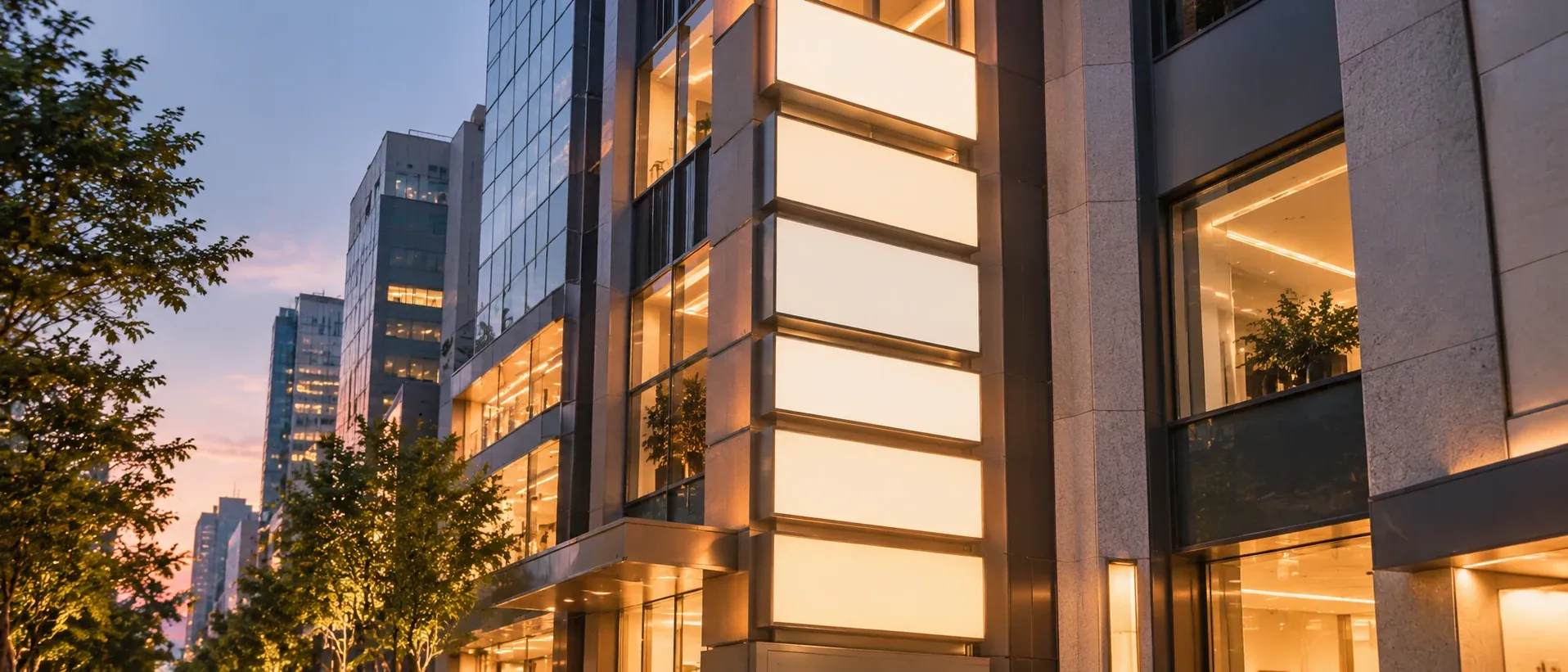
The shape of a Myeongdong building
Myeongdong is built of mixed-use towers: retail on the ground floor and the one above it, offices and clinics from roughly the third floor up, and sometimes a restaurant floor near the top. A single building can hold a dozen tenants, and several of them may be clinics.
That layout has a practical consequence. The address gets you to a building footprint that may be forty metres wide with three entrances, only one of which has the lift you want.
How to read the signage
Outside almost every building is a vertical stack of signs, one per tenant, in floor order. It is dense and mostly in Korean.
The trick is to stop reading names and read numbers instead. Find the floor you were given — the digit is the same in any language — and read across from it. Inside, the lift lobby usually carries the same list again on a board, often with more English on it than the outside signs have.
| What you were told | What to look for |
|---|---|
| A floor number | The stacked signs outside, in floor order |
| A building name | The name plate above the main entrance, and the lift lobby board |
| A road-name address | The number plaque on the building itself, usually beside the entrance |
| Only a clinic name | Ask in the lobby, or call — this is the case to avoid |
Floor numbering
Basements are B1, B2 and so on, and they are real floors here — a pharmacy or a cafe may well be below ground. Some buildings label the fourth floor F instead of 4, so the numbering can appear to skip. The buttons in the lift are the authority; count from those rather than from the outside.
Addresses and map apps
Korea uses road-name addresses: a road, a building number, then the unit. It reads in the opposite order to a Western address, largest first, which is worth knowing when you copy one into an app.
Use a Korean map app. Naver Map and Kakao Map both know building entrances, lift lobbies and walking routes through the pedestrian lanes in a way that the international alternatives do not, and both accept a road-name address as typed. Save the destination before you leave your hotel, while you still have wifi.
What to have on your phone
- The building name and floor, written down rather than remembered.
- The address in Korean, to show a driver or someone in the lobby.
- The station exit number you were given.
- The clinic’s own directions page, if it has one.
For dermia clinic, the nearest exit is Euljiro 1-ga exit 7, about five minutes on foot; City Hall exit 8, Hoehyeon exit 7 and Myeongdong exit 5 are seven to eight minutes away (all four). The building is on its location page, which is the kind of detail worth screenshotting before you set out.
If you are lost at the door
Ask in a ground-floor shop. Retail staff in Myeongdong are asked for directions to the clinics above them several times a day, and they will usually point you at the right entrance faster than another lap of the block. The clinic phrasebook has the line for it.
FAQ
Why is the clinic not at street level?
Street level in Myeongdong is the most expensive retail space in the district, and a clinic does not need passing trade. Consulting rooms want quiet, daylight and a floor plan that a shop unit cannot give, so clinics take the upper floors of the same buildings.
What should I ask for when I book?
The building name, the floor and the nearest station exit. A district and a clinic name are not enough to find a door in Myeongdong, and a road-name address alone will get you to the building but not into the right lift.
How do I read the signs outside a building?
They are stacked in floor order, so the lowest sign is the lowest tenant. Find the floor number first and read across, rather than scanning for a name. Many buildings list the same tenants again on a board inside the lift lobby.
Do Korean buildings skip the fourth floor?
Some do, or label it F rather than 4, because the word for four sounds like the word for death. If the numbering seems to jump, that is usually why. Trust the sign in the lift over your own count.
Which map app should I use?
A Korean one. Walking directions and building entrances are mapped far more thoroughly in Naver Map or Kakao Map than in the alternatives, and both handle a road-name address correctly.