Getting around Myeongdong
Myeongdong is served by several subway stations on different lines, and most of the district is close enough to walk. The detail that causes the most confusion is not the station but the exit, because a large station can put you several blocks from where you meant to be.
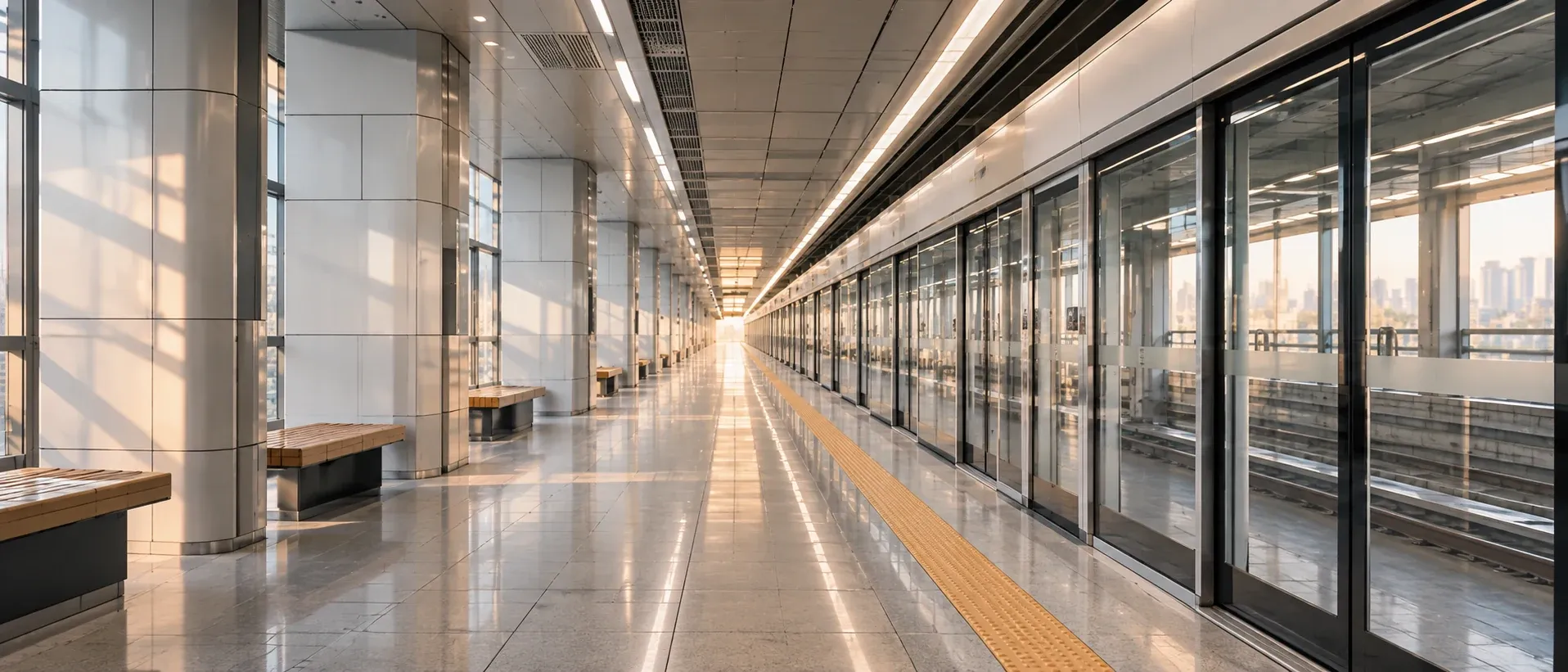
The stations around the district
Myeongdong is unusual in that it is bordered by several stations on different lines rather than served by one. That gives you options, and it means the sensible station is often not the closest one.
| Station | Line | Useful for |
|---|---|---|
| Myeongdong | Line 4 | The main retail lanes and the centre of the district |
| Euljiro 1-ga | Line 2 | The northern edge, and anything on the Line 2 loop |
| City Hall | Lines 1 and 2 | The western side, plus a transfer between two lines |
| Hoehyeon | Line 4 | The southwestern edge, towards the market quarter |
The practical rule: if you are already on Line 2, use Euljiro 1-ga or City Hall and walk, rather than transferring onto Line 4 to reach Myeongdong station. A transfer inside a large station can involve a long underground walk, stairs and a wait, which often costs more than the walk you were trying to avoid.
Walking to dermia clinic
dermia clinic, which publishes this site, is within a short walk of all four stations. These are the exits to use and the time on foot from each:
| Station | Line | Exit | Walk |
|---|---|---|---|
| Euljiro 1-ga | Line 2 | Exit 7 | 5 minutes |
| City Hall | Lines 1 and 2 | Exit 8 | 7 minutes |
| Hoehyeon | Line 4 | Exit 7 | 7 minutes |
| Myeongdong | Line 4 | Exit 5 | 8 minutes |
Pick the station on the line you are already riding rather than the one with the shortest walk; the difference on foot is a few minutes, and a transfer usually costs more than that.
How transfers work in general
- Transfer stations are signposted with the line colours and numbers, in Korean and English, on every platform.
- Follow the colour of the line you want rather than the station name; the names change as you go, the colour does not.
- Some transfers are a few steps across a platform. Others run several hundred metres through a connecting passage. The maps in the station show which, though not always before you have committed to the transfer.
- Trains on the same line can serve different branches. Check the destination shown on the front of the train and on the platform display.
Exits matter more than stations
This is the single most useful thing to know about Seoul stations. A station is not a point on a map; it is a long underground structure with numbered exits surfacing across a wide area, sometimes on opposite sides of a major road. Two exits from the same station can be a considerable walk apart at street level, and crossing back over can involve returning underground.
So when you are given a location, ask for three things:
- The station and the line.
- The exit number.
- The building name and the floor.
With those, the walk is trivial. Without the exit number, you are guessing. Exit numbers appear on signs throughout the station concourse, so once you have the number the rest looks after itself.
Walking
Most of the district is genuinely walkable, and inside Myeongdong walking is normally the fastest way to get about. Points worth noting:
- The core is flat, with the ground rising towards the south of the district.
- Main lanes become congested in the afternoon and evening. Parallel back streets are usually clearer for the same journey.
- Many lanes are pedestrianised or effectively so, which makes them pleasant to walk and awkward for vehicles to reach.
- After a procedure that has left skin sensitive, a short walk in the shade is more comfortable than standing in a crowd. Consider the time of day when the appointment is set.
Taxis and ride-hailing
Taxis are plentiful in central Seoul and ride-hailing apps operate here, which matters mainly for two situations: arriving with luggage, and leaving after a procedure when you would rather not use a crowded station.
Two things to expect. First, pick-up inside the district can be awkward, because the narrow lanes are hard for a car to enter; you may be asked to walk to a larger road. Second, not every driver reads a foreign-language address, so having the destination in Korean text on your phone removes most of the difficulty. Ride-hailing apps sidestep this by passing the destination to the driver directly.
Luggage
Myeongdong is a harder district for suitcases than for people travelling light. Lanes are narrow, crowds are dense at peak times, and station entrances do not all have a lift or escalator, so a wheeled case can end up on stairs. The practical approach is to separate the luggage journey from everything else: move bags by taxi, or move them outside the busiest part of the day, rather than combining that leg with an appointment.
Arriving from the airports
Seoul has two airports, Incheon and Gimpo. Both connect to the centre of the city by rail and by road, so reaching a central district is routine in either case, and Gimpo sits considerably closer to the city than Incheon does.
| Consideration | Why it matters |
|---|---|
| Rail or road | Rail avoids traffic; a car avoids stairs and transfers with luggage |
| Which airport | Gimpo is nearer the city centre, so the transfer leg is shorter |
| Time of day | A long journey immediately followed by a consultation is rarely a good idea |
| Direction of travel | Work out the transfer before you land, not at the arrivals hall |
If you are flying in and hoping to be seen the same day, read before you fly first. The transfer itself is straightforward; the difficulty is usually how little is left of you by the time it is done.
Plan it with the trip planner
Transport only becomes a question once the appointments have times attached to them. Set the schedule first, then work out which station and exit each day starts from. The trip planner puts the appointments in order so the journeys can be built around them rather than guessed at.
FAQ
Which station should I use for Myeongdong?
Myeongdong station on Line 4 is the obvious one, but Euljiro 1-ga on Line 2, City Hall on Lines 1 and 2, and Hoehyeon on Line 4 all border the district. The best choice depends on which line you are already on, because avoiding a transfer usually saves more time than picking the nearest station.
Why does the exit number matter so much?
Seoul stations often have a dozen or more numbered exits spread over a wide area, and they surface on different streets. Coming up at the wrong exit can leave you on the far side of a block with no obvious way across. Always ask whoever you are visiting for the exit number, not just the station name.
Do I need the subway at all once I am in the district?
Usually not. The core of Myeongdong is compact and flat, and walking between points inside it is normally quicker than descending into a station, riding one stop and coming back up.
Is it easy to manage luggage here?
Less so than elsewhere. The lanes are narrow and crowded at peak times, and not every station entrance has a lift or an escalator, so a suitcase can mean stairs. If you are arriving or leaving on a treatment day, plan the luggage leg separately from the appointment.