Myeongdong for visitors: what the district is like
Myeongdong is a compact, central district in Seoul with a heavy concentration of retail and clinics in the same few blocks. For a visitor here to keep an appointment, the useful qualities are that it is flat, walkable, served by more than one subway line, and used to people who do not read Korean.
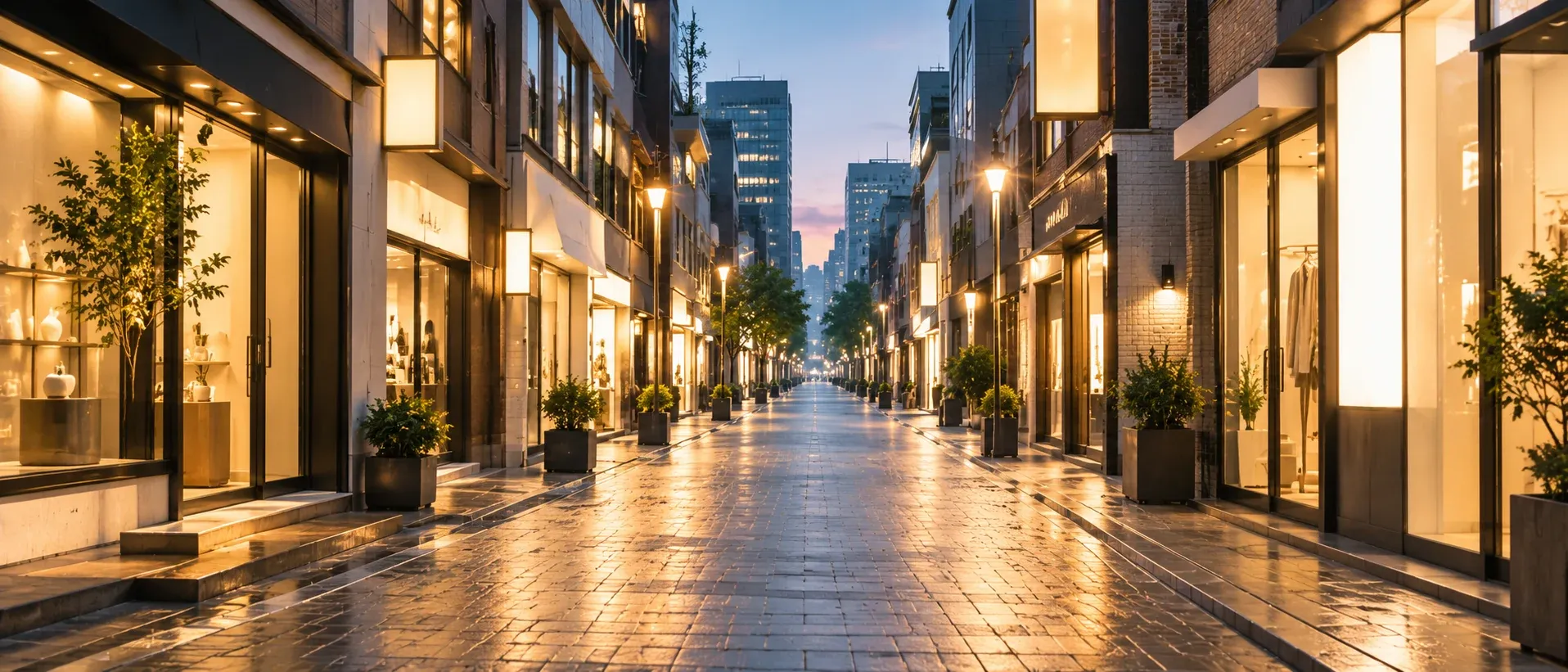
Where Myeongdong sits in Seoul
Myeongdong is a compact shopping and business district in central Seoul, on the northern side of the Han River and close to the old city core. Wide avenues form its edges and narrow pedestrian lanes fill in the middle, which is why the district feels considerably larger on foot than it looks on a map.
For anyone travelling specifically for a dermatology appointment, being central is worth more than it first appears. A treatment day is rarely only a treatment day: there is usually a consultation, a gap of some kind, the procedure, and then an evening you would rather spend close to where you are staying. A central district shortens every one of those legs.
The shape of the district
| Feature | What it means in practice |
|---|---|
| Dense, low-rise lanes | Most of the district can be crossed on foot without using transport |
| Mixed-use buildings | Retail at street level, with offices and clinics on the floors above |
| More than one subway line nearby | You are rarely far from a station, and rarely dependent on a single line |
| Heavy visitor traffic | Signage and staff language support assume people who do not read Korean |
| Largely flat ground | Little climbing, which matters if you are walking after a procedure |
The mixed-use point catches people out. A clinic here will usually be several floors up, reached through a lift lobby that sits back from the shopfronts, with its name on a vertical stack of signs beside the entrance. Visitors who expect something resembling a high-street surgery often stand outside the correct building convinced they are in the wrong place. Carry the building name and the floor number, not just the district.
The daily rhythm
The district is calm in the morning, fills through the afternoon and is at its busiest in the evening, when the food stalls in the main lanes draw a great deal of foot traffic.
- Morning — the quietest stretch of the day for keeping an appointment or walking through the area.
- Afternoon — busier, though still easy enough to move around.
- Evening — crowded main lanes, slow going in the narrowest sections.
That pattern is practical information rather than trivia. If you have had something done that leaves your skin sensitive to sun, heat or friction, an earlier appointment followed by a short walk back is more comfortable than threading through a crowd later on.
What is easy to find nearby
- Pharmacies — common throughout the district, marked with a green cross and the Korean word 약국.
- Convenience stores — several on most blocks; useful for water, cold drinks and small supplies.
- Cafes — reliable places to sit out a gap between a consultation and a procedure.
- Cosmetics retailers — unusually dense here, with staff who often speak some English, Chinese or Japanese.
- Cash machines and currency exchange — present, although not every machine accepts every foreign card.
- Toilets — inside stations and larger buildings rather than on the street.
Language, and where it stops being easy
Myeongdong is one of the more straightforward parts of Seoul to navigate without Korean. Much of the signage is multilingual, retail staff deal with foreign customers all day, and translation apps cope well because most of what you need to read is a label or a sign rather than a conversation.
Being understood in a shop and being understood in a consultation are different problems, though. Terms for treatments, aftercare instructions and anything to do with consent deserve more care than a translation app applied on the spot. The clinic phrasebook covers the vocabulary that actually comes up, and what to ask before booking covers settling the language question in advance.
Combining a treatment with the rest of the trip
Because the district sits in the middle of the city, doing something else on a treatment day does not require a long journey.
| If your day involves | The district helps because |
|---|---|
| A morning consultation and a free afternoon | Palaces, the restored stream and the older shopping quarters are all a short ride away |
| A procedure with downtime afterwards | You can be back where you are staying quickly rather than sitting on transport |
| A follow-up visit a few days later | Returning to the same district is a short trip rather than a cross-city commitment |
| Shopping you would rather do on foot | The retail density is already here, so it adds no extra journeys |
What the district is not
Myeongdong is not quiet, and it is not residential in character. The main lanes are narrow and genuinely crowded at peak times, and the area is aimed at visitors in a way some people find convenient and others find wearing. Nor is it the only district in Seoul with a concentration of clinics; the structural trade-offs against Gangnam are set out in Myeongdong compared with Gangnam.
Staying elsewhere in Seoul and travelling in for appointments is perfectly normal, and the subway makes it simple. Getting around Myeongdong covers the stations, the transfers and why the exit number matters more than the station name.
Plan it with the trip planner
Where you stay only matters once the appointments have dates. Put the consultation, the procedure and any follow-up on a timeline first, then judge whether a central base actually saves you anything. The trip planner works through that order, so the district decision follows the schedule rather than the other way round.
FAQ
Is Myeongdong a good base if I am in Seoul mainly for a treatment?
It suits that purpose well, mostly because it is central. Appointments, follow-up visits and the rest of your sightseeing all start from roughly the middle of the city, which keeps each journey short. The trade-off is that the district is busy and squarely aimed at visitors, so it is not a quiet base.
Will I be able to manage without Korean?
For shops, cafes, pharmacies and the subway, yes. Signage is frequently multilingual and staff deal with foreign visitors constantly. A medical consultation is a different matter, so confirm in advance what language support is available rather than assuming it.
Why can I not see the clinic from the street?
Clinics in Seoul are usually on the upper floors of mixed-use buildings rather than at street level. The building will carry a stack of signs listing each floor, and the way in is often a lift lobby set back from the shopfronts. Take the building name and floor with you, not just the district.
Is the district hilly?
The core of Myeongdong is largely flat, which is worth knowing if you would rather not walk up a slope after a procedure. The ground rises towards the south of the district as you head in the direction of Namsan.